an online portal for guitarmakers, guitar enthusiasts, and students
following Natelson & Cumpiano's treatise, GUITARMAKING: Tradition & Technology

To all our readers:
The $203 price gap between a $229 American-made articulated metal fixture and a $26 AliExpress clone highlights a fundamental difference in manufacturing economics, material standards, and supply-chain design between nations. While both items may appear identical on a screen, their physical realities and production costs could not be more different.
First, supply chain architecture plays a massive role. The $26 AliExpress listing represents a direct-from-factory model that bypasses distributors, retailers, and domestic marketing budgets. Conversely, a US-based item must support a multi-tiered supply chain where distributors and retailers require healthy profit margins, while the domestic brand absorbs significant inventory holding and customer support costs.
Second, the difference in materials and precision engineering is stark. High-end US fixtures utilize specified tool steels or aircraft-grade aluminum, heat-treated to exact hardness scales and machined to microscopic tolerances. The $26 alternative typically relies on cheaper pot metals or unhardened alloys coated to mimic the original. Crucially, the US price incorporates rigorous quality control and high scrap rates, whereas the overseas model delegates quality control to the consumer.
Finally, macroeconomic factors and intellectual property skew the math. US manufacturers bear the heavy burden of high labor rates, regulatory compliance, industrial overhead, and liability insurance. They must also recover the substantial R&D costs required to design, test, and patent the original device. The overseas factory skips R&D entirely by reverse-engineering the design, benefiting from lower local overhead and subsidized international shipping to flood the market with low-cost iterations.
Ultimately, the domestic fixture costs $229 because you are paying for guaranteed metallurgy, precision tolerances, and legal accountability. The $26 alternative is an exercise in extreme cost-optimization—sufficient for casual, light-duty use, but built on entirely different economic foundations.
Have you asked, as we did, how is it possible that an articulated metal drilling guide for luthiers, made in the USA, cost $229.00 but an apparently identical item sells on on Ebay, Temu or Ali Express for $26?
What follows are all the tools specified in all of Guitarmaking's procedures. Click on the tool's name for advice on sources for them and for commentary on the usage of each.
Measuring, Layout, and Drafting Tools
-
Marking Tools
-
Specialized Layout Tools: Half-pencil (a pencil stub ground in half lengthwise) for marking nut and saddle heights.
Edge Tools
-
Chisels:
-
Paring (patternmaker’s) chisels: 3/32-inch, 1/4-inch, and 1-inch widths.
-
Butt (cabinetmaker’s) chisels: 1/4-inch and 1/2-inch (used as a "glue chisel" to remove squeeze-out).
-
Bellied chisel: A luthier-modified chisel with a softened bevel for fine carving of braces and necks.
-
-
Planes:
-
Block plane (essential for truing and small tasks).
-
Smoothing plane (#03 or #04) with a dead-flat sole.
-
Toothing plane: A plane with a notched blade used as a visual depth guide during thicknessing.
-
Scraper plane (optional for hardwood plates).
-
-
Spokeshave: Essential for carving the neck shaft.
-
Knives:
-
Violin maker’s knife (skew knife) or skew chisels for carving complex curves.
-
Razor knife (X-Acto style) or disposable blade scalpels.
-
-
Scrapers: Flat, rectangular steel scraper blades (typically 0.8 mm or 1/32-inch thick).
Saws and Cutting Tools
-
Backsaws: 10 to 12-inch all-purpose dovetail saw (.035-inch kerf).
-
Circular table saw blades
-
Specialized Saws:
-
Fret-slotting saw: 8 to 10-inch backsaw with a specific kerf (.025-inch) to match fret wire.
-
Miniature backsaw for nut notches (.019-inch kerf).
-
Razor saw (X-Acto style) for very fine cuts (.013-inch kerf).
-
Jeweler’s saw for cutting shell inlays.
-
Coping saw or jigsaw with fine-tooth blades.
-
Files and Rasps
-
Rasps: 10 or 12-inch half-round rasps for rough neck shaping; 1/2-inch round rasp for ramping headpiece slots.
-
Wood Files: 8 and 10-inch half-round wood files.
-
Metal/Specialty Files:
-
8-inch single-cut mill file for fret ends and sharpening scrapers.
-
1/4-inch "rat tail" file for fine sculpting.
-
Swiss-pattern miniature files (needle files) for nut slots and headpiece crests.
-
12 to 14-inch single-cut flat file (used sparingly for fret leveling).
-
Clamps and Vises
-
Vises: Universal woodworking vise (swivel-jaw table-top vise); standard woodworker's bench vise.
-
C-Clamps: Standard 4-inch C-clamps; 3-inch deep-reach C-clamps; 5-inch or 6-inch deep-reach bridge gluing C-clamps.
-
Bar Clamps: Sliding 12-inch bar clamps with 4 to 6-inch reach.
-
Wooden Cam Clamps: Various reaches: 4-inch (4 required), 6-inch (2 required), and 8-inch (2 required).
-
Spring Clamps: Two to three dozen small spring clamps or stiff-spring clothespins for linings and bridge decoration.
Drilling Tools
-
Machines: Drill press (preferred for precision) or handheld electric/manual drills.
-
Bits:
-
High-speed steel bit set (1/16-inch to 1/2-inch).
-
Brad-point bits (essential for clean entries).
-
Forstner bits (5/8-inch) for headpiece slots.
-
Spade bits (5/8 to 3/4-inch) for workboard mounting.
-
Countersink bits.
-
-
Drilling Aids: Three-hole drill guide for classical tuning machines; woodworker’s doweling jig; T-handled reamer.
Sanding and Sharpening Tools
-
Sanding Boards: Large sanding board (18-22" x 24-28"); small sanding board (5" x 10").
-
Sanding Devices: Sandpaper plane (flat wooden block lined with sandpaper); radiused sanding blocks for fingerboard arching.
-
Hand Sanding: Felt, rubber, and cork sanding blocks.
-
Sharpening: Honing guide; ¼-inch plate glass or granite surfacing block for "scary sharp" system; vertical or horizontal sharpening machines.
Power Tools
-
Router: Handheld electric router (standard or "palm" size); mortising bits; 1/16", 1/8", and 1/4" straight bits; spiral flush-cutting bits.
-
Stationary Tools: Band saw; table saw with fine-kerf plywood blades; belt or disc sander; oscillating spindle sander (optional).
Specialized Luthier Tools
-
Bending Tools: Hot-pipe bending iron (electric or torch-heated); electric silicone heating blanket with temperature controller; side-bending forms/molds.
-
Assembly Fixtures: Shooting board for jointing plates; joining board for gluing plates; assembly workboardwith spacer hoops and shoes.
-
Binding/Purfling: Purfling cutter (marking gauge with a blade); pilot-wheel router edge guide.
-
Fretting Tools: Shoemaker’s (cobbler’s) hammer or plastic dead-blow hammer; ground-flush end nippers (horizontal-jaw wire cutters); inertial block (steel bar) for fretting over the soundbox.
-
Setup/Bridge Tools: String-clearance notch saw (modified jigsaw blade); inspection mirror; bridge pins reamer (#3 or #5 taper).
-
Finishing Tools: Palette knife or electric burn-in knife for stick shellac; rubber (muñeca) for French polishing; spray gun (High-pressure or HVLP) with organic vapor respirator.
-
Miscellaneous: Roping strip (continuous rubber strip cut from an inner tube) for soundbox assembly; splitting froe (or wide chisel) for processing brace wood.
Engraved stainless steel rulers
6-inch, 18-inch, 24-inch, and 36-inch lengths.

Squares
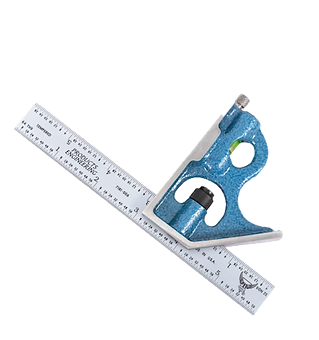
4-inch or 6-inch steel machinist's square; 6-inch or 18-inch machinist's combination square.